Category Archives: Book Notes

by Gavin Larsen

[This is a guest essay by friend-of-the-blog Gavin Larsen, who lives and teaches dance here in Asheville after an illustrious 18-year career in professional ballet.  I invited Gavin to share her “what it’s like to be me” story here at The 100 Billionth Person, and I extend the same invitation to my other subscribers.  Hope you enjoy. – CHC]

In the ballet world, we say, “Once a dancer, always a dancer,” and it’s true: no matter how defiantly we may turn our backs and try to walk away from the art and craft of dance, particularly ballet, we cannot rid our bodies of its imprint.  Ballet tattoos itself on our physicalities and embeds itself in our souls.

I was a professional ballet dancer for 18 years.  Before that, I trained for about ten.  And after I retired (“retired”) from my job as a performer, even then I couldn’t quit.  I kept taking technique classes and even performed a little bit, on smaller stages and in less technical choreography.

But slowly, I felt my mind and body loosening their grip on my fine-tuned, fiercely perfected technique.  I remember vividly the day I stopped wearing pointe shoes.  I was at the barre, warming up with a few relevés, when I found myself struggling to find my balance — I had to hold the barre a little too tightly for support.  Though a casual observer might have thought I was very much on top of my game, I felt like an amateur, not a former professional with decades of experience.

But appearances were not what mattered:  I cared about how this felt to ME.  And I knew my struggles would only get worse.  So, I decided this would be my last day on pointe.

I’d begun teaching dance long before I stopped performing — most dancers do — but being a full-time instructor presented a different challenge.  While I was a good teacher and the work was engaging, it didn’t leave me with the same sense of satisfaction at the end of the day.   For professionals, a day of dancing always follows the same pattern (class, rehearsal, performance) and leaves you feeling full.  Whether or not the day went well, whether you mastered the tricky choreography or not, at the very least you know you have given of yourself, physically and emotionally and intellectually, to something larger — to the dancers around you, to the art form, to yourself.  You go home with the satisfaction of having worked hard and well, and the fatigue in your bones is proof.

But I didn’t have that fulfillment anymore.  No matter how capably I demonstrated the exercises to my students or how exhaustively I worked on them in the studio, I felt I was losing my grip on the life I had led.  And I got scared that, with every passing day, my memories would fade and that the dancer part of myself — which was, really, all of myself — would be gone forever.  I needed it and clung to it.  And in a fit of desperation to preserve it, I began to write it down.

• • • • 

One day in 2011 or 2012, after I had transitioned from performing to teaching, I was passing through the lobby of the building that housed Oregon Ballet Theatre’s company and school.  One entire wall of the lobby was a window to the main studio space, offering everyone who entered the building a view of whatever dance activity was going on.  Company dancers and school students, warming up, taking class, rehearsing ballets or learning new choreography, all were on full display, as if life in the studio was also on stage.

That particular afternoon, company dancers were in rehearsal with artistic director Christopher Stowell for his ballet, The Rite of Spring.  Standing in the lobby watching them practice, memories of my own experience as a member of the cast a few years earlier came flooding back.  It was an unusual production in that the piece was largely en masse: almost the entire company appeared in it, but only a couple of us danced apart from what was literally a mass of bodies.

I had been a principal dancer then, accustomed to using my single voice, so being back in an ensemble was jolting at first.  But I soon relished the familiar comfort of being in the corps de ballet where I had started my career. The warmth of camaraderie, the different and energizing sense of “power in numbers” and the hilarity we shared to break the tension when the going got tough – all the familiar feelings of the days in my late teens and twenties when I was learning to be a professional dancer re-emerged.

My view through the lobby window that day — although just a brief snapshot — stirred up a strong, visceral reaction in me.  The dancers were working on a section that we had called, years before, the “human monolith.”  Christopher hadn’t given us any technical steps to execute — he simply told us to “ooze” our way into a tower of people.  One dancer would become the capstone at the top, supported by a few of the strongest men in the group.  The rest of us cascaded downwards from there in gradually smaller, flatter, muddier positions. The only directions we were given were that everyone, at all times, had to touch at least one other person— a hand or a foot or a neck or a torso — and that no one except the supporter-men could be upright.  And no ballet positions were allowed.  We were to embody humanity emerging from primordial slime.

Through the window, I watched those dancers work on “oozing” into the monolith and I immediately felt myself in there with them — as if I were outside my own body, watching myself in the past, yet physically present.  I felt I was reliving a dream.  Every physical and emotional feeling from my own days in The Rite of Spring came flooding back with such force that I almost thought I was late for rehearsal and needed to run into the studio to join them.

Seconds later, another emotion overcame the first one: the relief that I didn’t have to.

I was retired – I had no need to pull my body into shape and into a leotard, no need to be ready to do whatever moves a choreographer dreamt up.  But what I suddenly longed to do was relive those experiences, capture the essence of them, and find within them a thread of truth about what on earth this dancing life of mine had meant, how and why it had happened, and why had it happened to me?

I went home, opened my laptop, and began to write.  What came spilling out, in one sitting, would become Chapter 46 of the book that many more years of memory-capture ultimately delivered.

• • • • 

After that afternoon in the lobby, a flood of other snapshot memories cascaded down, so many and so varied that I feared losing them if I didn’t work fast enough.  I furiously wrote them down.  Some were a couple of pages, others a few paragraphs, or even less.  There were episodes, fragments of episodes, slivers of thoughts, reflections, images, conversations.  Eventually, feeling I needed some instruction in how to do what I was doing (always a dancer at heart, I wanted direction and correction), I signed up for a memoir-writing workshop, led by the marvelous Merridawn Duckler.

Each week, Merridawn gave us a title prompt and an assignment to write two pages about it.  (Five of her title prompts became chapters in my book.)  I distinctly remember how excited I felt to run to my computer to write about “The Fork in the Road” and “The Time I Taught Someone Something” and “My Scar.”

The workshop members shared their writings each week.  As nervous as I was to read my essays aloud to the group, it finally proved to me that my conviction was right: people — not just other dancers but real people — could be as fascinated by ballet as I was, if they were shown something a little below its surface.

• • • • 

Now, at last, I have found gratification again: my book, Being a Ballerina: The Power and Perfection of a Dancing Life, was published in April by the University of Florida Press and reviewed in May by the New York Times.

How does a dancer become a writer?  One would think these art forms could not be more different: the one is intensely physical, interconnected with and dependent upon other bodies and minds, and effervescent, disappearing forever the very next moment; while the other is completely stationary, solitary, and permanent.

But for me, the similarities that make expressing myself in words on a page as natural as using my body are strong.  I still don’t have to speak out loud, which emboldens me to be forthright, daring and fully revealing.  On stage, costume, characterization, choreography and the buffer of a proscenium stage gave me that fearlessness.  On stage, no one can stop you.  On the page, no one can, either.

Once a dancer, always a dancer.

[Gavin Larsen retired as a principal dancer in 2010.  Her final principal performance was in Balanchine’s “Duo Concertant,” music by Stravinsky.  For several more minutes of pleasure, I recommend you watch this video of Gavin’s movements and reflections.]

Read 4 comments and add yours | Read other posts in Book Notes, Life

I have the same problem with my reading list as I do with my New Year’s Resolutions: other interests and priorities eventually have their say.  Of the six titles on my 2015 reading list, I managed to read only two, having substituted three other books that were not on the list.  Arguably, Dice World, and Pieces of Eight were more compelling to me (and easier to read) than Sleepwalkers, the much-heralded backstory of World War I that I had pledged to finish this year.

I did not even tiptoe past the frontispieces of Racisms by Francisco Bethencourt or The People, Yes by Carl Sandburg, both of which were on my 2015 list.  And Octavia Butler’s 746-page Lilith’s Brood remains in little danger of being polished off any time soon, as I got bogged down a quarter-of-the-way through and have not yet been inspired to mount an offensive to conquer the rest.

2016 Reading ListWhat books will I finish in 2016?  Arguably by Hitchens will be the first.  I’m also interested in Piketty’s treatise on wealth inequality, Capital in the Twenty-First CenturyI have been waiting for it to appear in a more-affordable paperback edition.  After those, I will either return to the unread titles on my end-table or pursue whatever new writings inspire me.  (Who knows, your suggestion may be my inspiration.)

For better or worse, mine is a one-person book club.  Its rules are pretty loose and I don’t get blowback from other members about my picks.  It’s just like Oprah, give or take three billion dollars and sixty million fans.

Be the first to comment | Read other posts in Book Notes

I have had a long-standing interest in the nature of time.  As Rod Serling would say, it is a “dimension not only of sight and sound but of mind.”  Up to now, my favorite read on the topic has been Time’s Arrow Today, a volume of essays by eminent physicists and philosophers edited by Steven Savitt and published in 1995.  You must have read it.  It was the top pick on Oprah’s Book Club for eighty-two weeks until it was bumped by The Horse Whisperer, of all things.

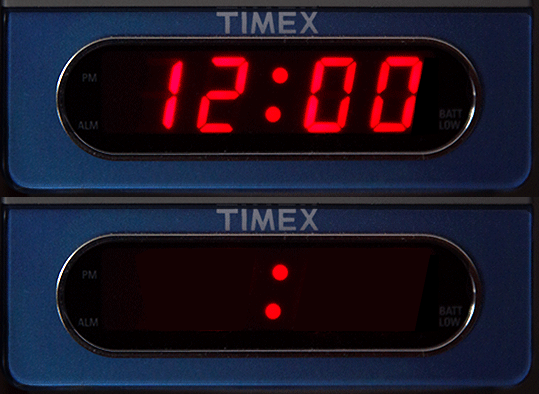
Flashing Digital Clock - CHCollinsA few years ago, I was looking for an update to that 1995-vintage material, and I came across The Oxford Handbook of Philosophy of Time, edited by Craig Callender, philosophy professor at University of California, San Diego.

Several papers in the volume looked interesting enough: The Possibility of Discrete Time, The Flow of Time, Time in Quantum Gravity.  So I put the book on my list and waited for it to come out in paperback — as an armchair science buff, I was not about to pay $170 for the hardcover edition, even if it did weigh in at 600 pages.  Eventually, the Handbook was available on Amazon for $42 and I ordered a copy.  It took me six months of starts and stops to finally finish it.

My Impressions

As always, I start with a disclaimer: this post is not a review but my own takeaway from the experience of reading the book.  That said, I will get right to the point and explain why I disagree with other reviews and do not recommend The Oxford Handbook of Philosophy of Time to other lay readers.

I had hoped that the Handbook would follow the example of Time’s Arrow Today and provide a clearly-written, mostly physics-oriented collection of papers, updated to reflect recent findings and theories.  I was encouraged by the fact that the Handbook‘s editor, Craig Callender, had been co-editor of another of my favorite volumes, Physics Meets Philosophy at the Planck ScaleWhile Callender’s Physics Meets Philosophy was more technically challenging than Time’s Arrow Today, it was still accessible to a non-expert like myself.  Callender’s Handbook, on the other hand, assumes that its readers have a professional background in philosophy and/or physics and (as the title suggests) tilts decidedly to philosophy.¹  Physics is largely absent for the first 484 of its 678 pages.

I have ranted about philosophy before, so I will try to keep the following remarks brief, calm, and to the point.  I really have no use for the field of philosophy.  Every time I start reading a philosophy paper, I feel like I have just stepped into the midst of some battle that the author is waging with his or her less well-informed colleagues.  And what is more maddening is how the participants believe these battles are to be won or lost by the force of argument, with little regard for evidence or observation of the physical world.

Photo of Pelloms Time Shop WindowThis seems illogical to me, but the writers of the Handbook generally followed these rules of engagement.  Armies of words were deployed to decide whether an object is still the same object one minute later.  Scores of  paragraphs died on the front lines between this ism and that ism.  Pages of metaphysical casualties, slain by pure reason.

The biggest waste of Time was the 53-page essay Time Travel and Time Machines by Chris Smeenk and Christian Wüthrich.  Now if you are a science fiction fan, you might think time travel would be one of more intriguing topics in the book, and indeed the authors often teased the reader about how closed timelike curves (i.e., pathways for time travel) are not ruled out by this, that or the next strawman they posited.  The discussion went on for thirteen long pages, upon which the authors declared (my emphasis added):

… We conclude that time travel is neither logically nor metaphysically impossible, as all arguments attempting to establish inconsistency have failed and the philosophical considerations adduced against … time travel are inconclusive at best.  But even if logic and metaphysics do not rule out time travel, physics might.  Let us thus now turn to the question of whether physics permits time travel.

The authors could have saved us all a lot of time and prolixity and just started with physics, I thought as I read this.  Surely, I can’t be the only one who was annoyed.

As much I disliked the metaphysical bent of Handbook, I was just as weary of its jargon.  I would put the jargon threat-level at   SEVERE  •  YOUR BRAIN MAY DEFLAGRATE   based on passages like this, from Time and Modality by Ulrich Meyer:

An alternative to constructing times as sets of sentences is to regard them as maximal propositions.  Instead of using quantification over sets of sentences in the meta-language, this approach enriches the object language with propositional quantifiers.

The purpose of reading non-fiction is to learn something you didn’t already know, and learning takes effort.  Out of respect for this process, I put a reasonable amount of effort into understanding the concepts and following the arguments.  But in several papers — including the one above — the jargon jungle got so thick that I had to give up and go into skim-mode.

The Handbook deals with unique aspects of time, and it cannot help but stimulate one’s own thoughts on the topic.  But as I mentioned, the Handbook seems to have been written not for you or me but for professionals in the field.  I am no anti-intellectual, but I do feel a little sorry for those professionals.²

My View of Time

Photo of clock at Musee D'OrsayThe Handbook discusses a number of isms,  alternate views about the nature and/or our perception of time: presentism, moving spotlight, block universe, growing block, glowing edge and others.  Each of these viewpoints has its own ardent advocates.

Many of those isms are based on the thesis (or hope) that our sense of the present, past, future and passage of time says something about time’s fundamental nature.  I think this is a poor assumption.  Far too much of the Handbook is devoted to speculation on what I call the phenomenology of time — constructs like the specious present, the moving now and so on  — as if our sense of time requires a metaphysical explanation.  I maintain that human physiology — the structure and speed of our sensory and memory processes — is largely and perhaps entirely responsible³ for our sense of time’s passage and, as such, should have been examined in depth at the outset.  But Temporal Experience by Jenaan Ismael was the only paper that touched on this, and then only for a few pages, and then only after reaching Page 460 of the Handbook!

To expand on this, I offer a thought experiment.  Pretend that Oliver Van Winkle has a strange sleep disorder.  He wakes up for a half-second every twelve minutes, then instantly goes back to sleep.  While he is asleep, he does not see, hear or dream anything.  But when he wakes up, he looks out his window, and he adds that half-second scene to his memory along with those from his last few wakeful moments.  For Van Winkle, one day seems to pass by in one minute.  Objects like rocks and trees appear to stay put, but everything else flickers and flashes chaotically in and out of his visual field.  Van Winkle’s world is mostly a blur — his sampling rate is so low, he can hardly make sense of anything.

I actually want to make two points from this thought experiment.  The first is that our sense of time is so closely tied to our physiology that I question whether philosophy has anything useful to say about it.  My second point is that the nervous system of animals most likely evolved to provide frequent sampling of our surroundings and a continuous flow of experience — otherwise, beings of any complexity could hardly navigate and survive in this world.⁴

My take is that the phenomenology of time may be worthy of study, but it is much less intriguing than the physical nature of time.  And that is what I would like to end with.

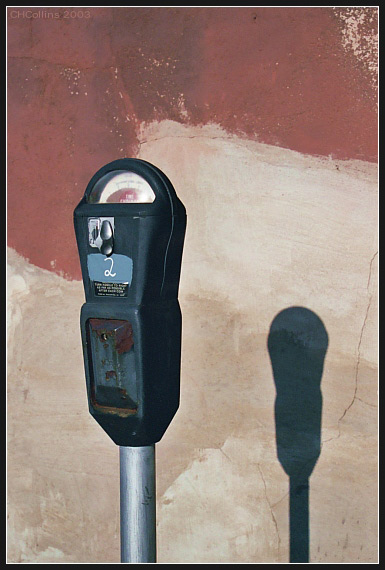
Parking Meter and Its Shadow - CHCollinsAlthough I read physics papers, I really do not grasp the math of post-Newtonian physics.  (Out of respect for the learning process, I make an effort.)  What I do know — or more accurately, what I have learned from physicists who have done the research — is that our intuition is wrong: there is no universal clock metering out the seconds in back of a three-dimensional stage we call space.  Instead, physics has shown that time and space, matter and energy are woven together in a dynamic, multi-dimensional fabric, each thread bending and guiding and interacting with the others.  So I really cannot talk about time without also sharing my views of the universe.

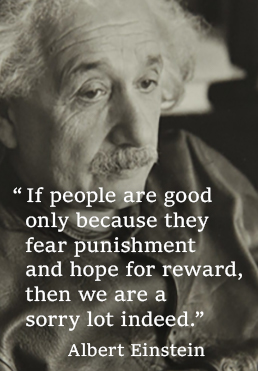
This leads to another disclaimer: my conceptual model of the universe is an amalgam of what I have read (and partly comprehended) by physicists such as Henri Poincaré, Ernst Mach, Albert Einstein, Roger Penrose, Stephen Hawking, Carlo Rovelli and — probably the most influential for me — Julian Barbour⁵.  Each of them would disown the statements that follow.

• I start by visualizing the universe as a configuration of matter and energy fields distributed in spacetime.  I know, I tossed out the word spacetime as if it were just another poodle mix.  Einstein showed that space and time are not independent, even though it seems that way in our everyday, low-speed world.  But never mind that right now, the keyword here is configuration.  (Go follow that link.  I’ll wait.)

• I view time as a measure of change in the spacetime configuration of the universe.  Without change, there is no time.  Since time flows only in those regions in the universe where there is change and not elsewhere, there is no universal time.  Duration is local.

• For one configuration of the universe to be distinguishable from another, it must change by a minimum distance known as a Planck length.  This is a pretty small distance: there are about two trillion trillion trillion Planck lengths per inch.  In football-field terms, the Planck length has about the same value as a one-inch stack of trillion-dollar bills or a one-inch lock of Donald Trump’s combover.

• And while there is no universal now, as we know from Einstein’s theories of relativity, there may be a smallest tick-of-the-clock, based on how long it takes light to travel the distance between two distinguishable configurations.  This tick is called the Planck time, and there are about one billion trillion trillion trillion Planck times per minute in our ordinary experience.  In football-field terms, there are about seven Planck times from one outrageous pronouncement by Donald Trump to his next.

Jokers aside, I have one final thought about time.  The speed of light is a fundamental constant of our universe — it ties space to time and matter to energy.  The speed of light is exactly 299,792,458 meters per second.  This number is exact because (a) the meter has been defined in terms of the speed of light, not the other way around, and (b) the second has been defined as the duration of a number of vibrations of a cesium atom.  I have a philosophical problem with this, which I am now entitled to share, having just finished a 600-plus page book titled The Oxford Handbook of Philosophy of Time.

The speed of light is more fundamental than any property of a cesium atom.  Cesium is a rare element, created in supernova bursts, whereas light permeates our universe.  So why do physicists define light in terms of cesium?  It is because they have adopted dimensions called time and distance, which makes speed (as in speed of light) a derived notion, the result of dividing distance by time.  But I venture that our universe is based on a dimension called light, from which our everyday notions of distance and time devolve.  I would love to know what Rod Serling thinks of this idea, but sadly he left our dimension of sight, sound, and mind forty years ago.

_______________________

Notes and Further Reading

¹ The Oxford Handbook introduced me to the concept of truthmakers.  I had never heard of truthmakers, so I looked it up and discovered truthmaker theory: “Socrates is a truthmaker for the proposition that Socrates exists, and the proposition that Socrates exists is a truthmaker for the proposition that there are propositions.  But Socrates is no truthmaker for the proposition that there are propositions.  Truthmaking is not transitive in general, but there could be individual instances of it.”  And you wonder why I like physics.

² “Philosophy of time should aim at an integrated picture of the experiencing subject with its felt time in an experienced universe with its spatiotemporal structure,” says Steven Savitt.  A worthy preface to the Oxford Handbook of Kumbaya.

³ Experiments have shown that sampling times longer than seven seconds cause people to lose the sense of the continuous flow of time (see Block and Gruber, 2014).

⁴ This was a Darwinist argument that turned somewhat anthropic, to my own surprise.

⁵ I like Julian Barbour.  He speaks plainly and in a way that helps a reader visualize the cosmos he has in mind.  Since I do not understand advanced math, I gravitate to physicists who paint the most vivid pictures.  It may be a weakness of mine, or maybe not.

Be the next to comment | Read other posts in Book Notes