Comment to coca-cola.support@p67ix100.na.ko.com, September 10, 2014 2:39 PM:
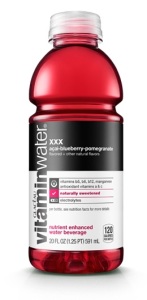 One of the bottles of a 6-pack of Glaceau Vitamin Water (XXX flavor) had a soapy, filmy, perfumey flavor. We could tell right away that it was off-flavored. It was purchased at an Ingles market in Asheville NC.
The writing on the bottle is: DEC1514NPA3 followed by 0906 CT488. Another bottle in that six-pack had the same code and tasted OK. I’d like to know what caused this and whether I drank a bad chemical.
Reply to comment, September 15, 2014 2:26 PM:
thank you for contacting glacéau®, craig. we appreciate your taking the time to make us aware of your experience and apologize for any inconvenience this may have caused you.
we are very interested in this unusual situation and would like to obtain additional information, so we can provide a complete report to the appropriate management. we would like to request the following:
• your daytime telephone number;
• the date you purchased the product and the date the incident occurred;
• whether or not you still have the bottle;
• the street address of the store where you purchased the product;
• the number of ounces contained in the bottle (for example, 20-ounce plastic bottle);
please feel free to reply directly to this message with the information and you should expect a response soon. we do ask that you hold on to the packaging until you hear from our representative.
please include the following reference number in the subject line: {ticketno:[8003800771]}
we appreciate your cooperation and look forward to hearing from you again.
Alice
consumer relations representative
glacéau
www.glaceau.com
1-877-GLACEAU
__________
Response to Glaceau Coca-Cola, September 15, 2014 5:31 pm:
Thanks for your response. Here is the info you asked for.
Daytime phone = 828-254-xxxx
Purchased sometime the first week of September
Opened and tasted the bottle on Sept 10
Purchased at Ingles Supermarket, 915 Merrimon Avenue, Asheville, NC 28804
Purchased as a six-pack of 16.9-oz XXX flavor. We put the six-pack in the fridge when we got home.
We still have the bottle and what remains (a little more than half) of the contents.
My wife Sue and I both thought the product tasted “off”. – Craig Collins, Asheville, NC
__________
Reply received via U.S. Mail, September 22, 2014:
september 17, 2014
dear craig,
thank you for informing us of your experience with out glaceau product. we are sorry to hear that this product did not meet your expectations or our standards.
the quality of products bearing our trademarks is the cornerstone of our company. for this reason, we work closely with every production facility to provide you with products that meet the highest standards. the details of your experience have been shared with their quality control.
if you still have the unsatisfactory package, please recycle it at this time. the information you provided is sufficient for quality control purposes. so the production facility does not need to obtain the actual package from you.
we appreciate your feedback which will help us become a better company and continue to deliver on our promise of better water. please accept the enclosed coupon(s) along with our apologies for the inconvenience. feel free to redeem your coupon(s) at a major grocery retailer. we hope you’ll have the opportunity to enjoy your favorite beverage soon, with our compliments!
sincerely,
pamela teamer-yisreal
manager, consumer affairs
glaceau
__________
Response transmitted via World Wide Web, 8:46 PM, September 23, 2014:
Thanks a lot, Glaceau Coca-Cola. First, you never addressed my personal concern about what I had the misfortune to drink. It was all about your so-called quality control. Then, you had the nerve to try to buy me off with coupon(s) — even as you decided to send me only one coupon(s) — and then it was for a product (Powerade) that was not the subject of this complaint and a product that I do not drink! Thanks a lot, Glaceau Coca-Cola.
Finally, Glaceau Coca-Cola, spare me from your brand-managers who think the most important thing is for you to use only lower-case letters in your correspondence as you tell me to fuck-off because you have a corporate reputation to maintain. Glaceau Coca-Cola, feel free to use all the lower-case letters in the alphabet to respond to this: i will not be drinking coca-cola products NO more.
sincerely, craig h collins



Comment to coca-cola.support@p67ix100.na.ko.com, September 10, 2014 2:39 PM:
The writing on the bottle is: DEC1514NPA3 followed by 0906 CT488. Another bottle in that six-pack had the same code and tasted OK. I’d like to know what caused this and whether I drank a bad chemical.
Reply to comment, September 15, 2014 2:26 PM:
thank you for contacting glacéau®, craig. we appreciate your taking the time to make us aware of your experience and apologize for any inconvenience this may have caused you.
we are very interested in this unusual situation and would like to obtain additional information, so we can provide a complete report to the appropriate management. we would like to request the following:
• your daytime telephone number;
• the date you purchased the product and the date the incident occurred;
• whether or not you still have the bottle;
• the street address of the store where you purchased the product;
• the number of ounces contained in the bottle (for example, 20-ounce plastic bottle);
please feel free to reply directly to this message with the information and you should expect a response soon. we do ask that you hold on to the packaging until you hear from our representative.
please include the following reference number in the subject line: {ticketno:[8003800771]}
we appreciate your cooperation and look forward to hearing from you again.
Alice
consumer relations representative
glacéau
www.glaceau.com
1-877-GLACEAU
__________
Response to Glaceau Coca-Cola, September 15, 2014 5:31 pm:
Thanks for your response. Here is the info you asked for.
Daytime phone = 828-254-xxxx
Purchased sometime the first week of September
Opened and tasted the bottle on Sept 10
Purchased at Ingles Supermarket, 915 Merrimon Avenue, Asheville, NC 28804
Purchased as a six-pack of 16.9-oz XXX flavor. We put the six-pack in the fridge when we got home.
We still have the bottle and what remains (a little more than half) of the contents.
My wife Sue and I both thought the product tasted “off”. – Craig Collins, Asheville, NC
__________
Reply received via U.S. Mail, September 22, 2014:
september 17, 2014
dear craig,
thank you for informing us of your experience with out glaceau product. we are sorry to hear that this product did not meet your expectations or our standards.
the quality of products bearing our trademarks is the cornerstone of our company. for this reason, we work closely with every production facility to provide you with products that meet the highest standards. the details of your experience have been shared with their quality control.
if you still have the unsatisfactory package, please recycle it at this time. the information you provided is sufficient for quality control purposes. so the production facility does not need to obtain the actual package from you.
we appreciate your feedback which will help us become a better company and continue to deliver on our promise of better water. please accept the enclosed coupon(s) along with our apologies for the inconvenience. feel free to redeem your coupon(s) at a major grocery retailer. we hope you’ll have the opportunity to enjoy your favorite beverage soon, with our compliments!
sincerely,
pamela teamer-yisreal
manager, consumer affairs
glaceau
__________
Response transmitted via World Wide Web, 8:46 PM, September 23, 2014:
Thanks a lot, Glaceau Coca-Cola. First, you never addressed my personal concern about what I had the misfortune to drink. It was all about your so-called quality control. Then, you had the nerve to try to buy me off with coupon(s) — even as you decided to send me only one coupon(s) — and then it was for a product (Powerade) that was not the subject of this complaint and a product that I do not drink! Thanks a lot, Glaceau Coca-Cola.
Finally, Glaceau Coca-Cola, spare me from your brand-managers who think the most important thing is for you to use only lower-case letters in your correspondence as you tell me to fuck-off because you have a corporate reputation to maintain. Glaceau Coca-Cola, feel free to use all the lower-case letters in the alphabet to respond to this: i will not be drinking coca-cola products NO more.
sincerely, craig h collins