And this is why: every institution (college, foundation, large corporation, clinic, agency, government body) inevitably realizes that, whatever it once represented, its continuity as an institution is part of its identity and is highly marketable. The longer an institution exists, so the preservation of its own continuity grows increasingly important and eventually becomes the institution’s unstated but primary goal. Ipse dixi.
Think about how continuity is sold to you as a value proposition in everyday life, and whether it amounts to anything. Here’s a trivial example. In college, I joined the staff of The Tartan (“Carnegie-Mellon’s Student Newspaper Since 1906”) and served for a while as its features editor, columnist and cartoonist — part of some “long and proud tradition” of Tartan contributors. But does anyone remember that, other than a scant few of my college mates? Does anyone currently on the staff delve into The Tartan archives and read my articles and say, “Ahh, so that’s the way to write a college newspaper!” Of course they don’t, because what we did in the 1970s is neither memorable or relevant. The name of the paper is the only thing that’s the same. The Tartan is not your grandfather’s college newspaper. Or your mother’s.
This does not keep the Carnegie-Mellon University website, when describing The Tartan, from mentioning the year 1906 for no other purpose than to — you guessed it — remind tuition-paying parents of the continuity of the institution. The message to parents: your $64,000 a year will be buying something that lasts a lifetime. An academic diamond ring, if you will.
I suggest that whether we are talking about The Tartan or Kodak or The New York Times or The Centers for Disease Control and Prevention, the idea that institutional continuity exists, that it ensures quality and consistency and is therefore entitled to our trust, is a fragile framework of fabrications. The premise that continuity signifies strength and proficiency is sold to us by our beloved institutions for plainly Darwinian reasons: to win our trust, to gain our money, and ultimately to ensure the continued existence of the institution.
• • • • •
The people who manage institutions are loath to admit fault, either personal or collective. Instead, like birds flying to cover in a storm, they tend to seek the protection that the institution offers. They believe that the institution’s aura of trustworthiness, implied by its durability, is like a dome that shields its members from harm. The institutional dome protects its affiliates in (at least) two ways: by diffusing responsibility among its members; and by making the actions of its members invisble to anyone outside the dome. I contend that it is the people outside the institution who more often need protection, from the complacency and irresponsibility of those inside.
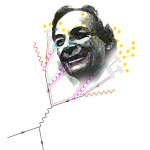 One of my heroes is the late Richard Feynman, the Nobel Prize physicist who, during the Rogers Commission hearings on the 1986 Challenger shuttle disaster, posed a fundamental question: “What is the cause of management’s fantastic faith in the machinery? It would appear that, for whatever purpose, be it for internal or external consumption, the management of NASA exaggerates the reliability of its product, to the point of fantasy.”
These challenging remarks would lead William P. Rogers, former Secretary of State, head of the commission, and a person who had managed an institution or two himself, to say, “Feynman is becoming a real pain in the ass.”
Feynman spoke bluntly about the institution that was NASA in the 1980s. “Official management … claims to believe the probability of failure is a thousand times less. One reason for this may be an attempt to assure the government of NASA perfection and success in order to ensure the supply of funds. The other may be that they sincerely believed it to be true, demonstrating an almost incredible lack of communication between themselves and their engineers.”
Bingo. Except Feynman was correct on both counts, not just one reason or the other.
• • • • •
Such is the mindset of institutions. They come to believe, “Our endurance is testimony to our accumulated wisdom and the way we do things. So why question how we do things?” This is how they lie to themselves, as they lie to us — with the weak logic of the continuity of their own existence.
One may argue that what we call institutional memory — facilities, systems, documents and procedures that guide (and constrain) the work of an institution — demonstrate the value of continuity. I disagree. Performance depends on people who are there today. Institutional memory is worthless if it is not effectively applied. Systems and structures put in place by predecessors mean nothing when new leaders discard them in favor of their own consulting-firm-0f-the-month ideas. Most importantly, poor leadership negates every institutional asset, including its legacy. Poor leadership breeds cynicism and sub-optimal performance from all those who are forced to endure it.
Institutions per se do not do anything — whatever they do is done by real live people. Words and deeds of dead people may be invoked, to provide inspiration or pay homage to tradition, but the fact remains, there is no Thomas Edison at General Electric today, no Clara Barton at the Red Cross, no Colonel Sanders cooking KFC, and no George Washington in the White House.* We forget that institutions are people. High-strung people. Slackers. Allergy sufferers. Maybe your neighbors, or even you. My point? Individuals make the decisions at institutions and individuals should be held accountable for them.
• • • • •
Many people who work for an institution are there for a relatively short time, with respect to the lifespan of the institution. Asking workers to keep the history of the institution in mind as they perform their duties can be counterproductive. It can encourage futile and wasteful efforts to keep “sinking ships” afloat, when the better thing to do would be to abandon the past and embrace the problem at hand.
This brings to mind the most distasteful memory from my final years at Kodak. It was the time when film was still popular, consumer digital cameras had 3 or 4 megapixels at best and cost a few hundred dollars, and Kodak sold a lot of both. I worked in the silver-halide (i.e., traditional photography) area and was attending our year-end, division-wide meeting where our next research budget was to be presented. Many of the silver-halide scientists were outraged, to put it mildly, when management told them that the “digital side” of the company would, for the first time in Kodak history, be given more research dollars than the “film side” of the business.
In the question-and-answer period that followed, one disgruntled audience member after another stood up and defended continued research in silver-halide technology, asserting that film promised higher resolution and better image quality than digital could hope to offer for years and years to come.
Those researchers weren’t so wrong about film’s capabilities, but they were dead wrong about what consumers wanted. As it turned out, photo shooters cared more about convenience and cost than image quality or physical prints. But many of our scientists (and their management) seemed to care more about defending their hallowed ground than helping the company deliver something future consumers would want. There was clearly a split within the ranks between film and digital, and Kodak leadership waffled. You know the rest of the story. In just a few years, there was no more turf to defend, film, digital or otherwise.
Kodak did do one thing well during that time. It was excellent at believing its own lies.**
• • • • •
If institutions are to be trusted (we do need to trust them because they aren’t going away), they need to stop acting like institutions and more like people, more like the people they are comprised of, more like the people they serve. Whatever worth an institution has is derived from individuals, working together. Storied pasts do not matter, only the performance of current leaders and members. If an institution is not effective or trustworthy, then something needs to change, most likely the method by which its leaders are selected.
I can think of five ways that institutions can help us trust them:
(1) Spread out. The more massive the institution, the less important any one individual feels and the more that personal responsibility is diffused. No individual in the institution should be more than two steps from top management, or two steps from direct contact with people outside the institutional dome. Increasing the number of points of contact with the public will also help increase the transparency of the institution.
(2) Increase the stakes. Leaders and workers need to be accountable. To be accountable, their performance must be made visible, as must their goals. (The goals of an institution are too often obscured when convenient, especially to mask poor leadership.) It is a powerful tool for accountability that the public knows the names of individuals, not just the title of an office in a deparment of a division. And when a person fails in an important effort, he or she should be reassigned or let go, period. That is what accountability means. It is not to punish but to make for a better-working institution.
(3) Forget the past. Instituions cripple themselves when they insist on building bridges between the past and the future using resources at hand. The past is gone. Painful as it may be for existing workers, a viable institution needs to equip itself for challenges ahead, and that calls for workers with new, specific skill sets. Institutions must continuously re-train or re-hire, or both. If not, they will have to lie about their outdated capabilities. This also applies to the facilities and information systems an institution uses. When legacy systems get in the way of effectiveness (think the Veterans Health Administration), then people throughout the institution — including its leaders — need to make noise, not excuses, until something is done about it.
(4) Be externally, not internally, responsive. An institution contemplating its own navel (that is, its legacy) is not fully engaged in its real purpose. The leader cannot just be the institution’s cheerleader-and-fundraiser-in-chief — the leader must model for the public how everyone in the institution is expected to perform. The leader must be willing to go before the public and speak the truth about things that have gone wrong. Sugar-coating a problem should be cause for a leader’s dismissal — too often it is part of the leader’s job description.
(5) The key to all of this lies is the selection process (and de-selection as needed) for leaders and managers. Institutional board members — CEOs and other big guns — tend to bring in the people they are comfortable with, which means (to no one’s surprise) people like themselves. Boards need to be diverse, not just in race and gender but in background. And boards need to operate democratically — if a board simply rubber-stamps the chairperson’s decisions, any diversity of background among board members is useless window-dressing. Finally, when it comes to government agencies, we can only hope that some politician, someday, will end the long-standing tradition of putting cronies and mega-donors into leadership positions. Sadly, I’m not sure how much leverage the voting public will ever have in this regard. Money talks, and we are outspent.
Institutions become too tightly bound to their pasts in any number of ways. They need to stop lying to themselves — and to us — that their past performance implies future results. And they need to stop reminding themselves — and us — about their reputations and traditions and focus instead on doing the job they are supposed to do, today.
__________
* The alert reader knows that was a trick statement, as George Washington never did live in the White House.
** The fiction (from Forbes, August 21, 2000): “We happen to be in a business that is going to explode,” says [Kodak CEO Dan] Carp, 52. “Digital means more picture-taking, whether they are health pictures, professional pictures or consumer pictures. And with that comes more and more output.” He vows Kodak will expand sales by 8% to 12% a year and boost profits 10% annually for the next five years, triple its earnings growth rate over the past ten. That would push revenue from $14 billion to $24 billion, with most of the surge fueled by digital products.
The facts: 2000 – Kodak earned $1.407 billion. 2001 – earned $76 million. 2002 – earned $770 million. 2003 – earned $265 million. 2004 – earned $544 million. 2005 – lost $1.26 billion. Actual total profit over the years 2001 to 2005: $395 million. Profits “promised” by CEO Carp for the same period: nearly $9.5 billion.


And this is why: every institution (college, foundation, large corporation, clinic, agency, government body) inevitably realizes that, whatever it once represented, its continuity as an institution is part of its identity and is highly marketable. The longer an institution exists, so the preservation of its own continuity grows increasingly important and eventually becomes the institution’s unstated but primary goal. Ipse dixi.
Think about how continuity is sold to you as a value proposition in everyday life, and whether it amounts to anything. Here’s a trivial example. In college, I joined the staff of The Tartan (“Carnegie-Mellon’s Student Newspaper Since 1906”) and served for a while as its features editor, columnist and cartoonist — part of some “long and proud tradition” of Tartan contributors. But does anyone remember that, other than a scant few of my college mates? Does anyone currently on the staff delve into The Tartan archives and read my articles and say, “Ahh, so that’s the way to write a college newspaper!” Of course they don’t, because what we did in the 1970s is neither memorable or relevant. The name of the paper is the only thing that’s the same. The Tartan is not your grandfather’s college newspaper. Or your mother’s.
This does not keep the Carnegie-Mellon University website, when describing The Tartan, from mentioning the year 1906 for no other purpose than to — you guessed it — remind tuition-paying parents of the continuity of the institution. The message to parents: your $64,000 a year will be buying something that lasts a lifetime. An academic diamond ring, if you will.
I suggest that whether we are talking about The Tartan or Kodak or The New York Times or The Centers for Disease Control and Prevention, the idea that institutional continuity exists, that it ensures quality and consistency and is therefore entitled to our trust, is a fragile framework of fabrications. The premise that continuity signifies strength and proficiency is sold to us by our beloved institutions for plainly Darwinian reasons: to win our trust, to gain our money, and ultimately to ensure the continued existence of the institution.
• • • • •
The people who manage institutions are loath to admit fault, either personal or collective. Instead, like birds flying to cover in a storm, they tend to seek the protection that the institution offers. They believe that the institution’s aura of trustworthiness, implied by its durability, is like a dome that shields its members from harm. The institutional dome protects its affiliates in (at least) two ways: by diffusing responsibility among its members; and by making the actions of its members invisble to anyone outside the dome. I contend that it is the people outside the institution who more often need protection, from the complacency and irresponsibility of those inside.
These challenging remarks would lead William P. Rogers, former Secretary of State, head of the commission, and a person who had managed an institution or two himself, to say, “Feynman is becoming a real pain in the ass.”
Feynman spoke bluntly about the institution that was NASA in the 1980s. “Official management … claims to believe the probability of failure is a thousand times less. One reason for this may be an attempt to assure the government of NASA perfection and success in order to ensure the supply of funds. The other may be that they sincerely believed it to be true, demonstrating an almost incredible lack of communication between themselves and their engineers.”
Bingo. Except Feynman was correct on both counts, not just one reason or the other.
• • • • •
Such is the mindset of institutions. They come to believe, “Our endurance is testimony to our accumulated wisdom and the way we do things. So why question how we do things?” This is how they lie to themselves, as they lie to us — with the weak logic of the continuity of their own existence.
One may argue that what we call institutional memory — facilities, systems, documents and procedures that guide (and constrain) the work of an institution — demonstrate the value of continuity. I disagree. Performance depends on people who are there today. Institutional memory is worthless if it is not effectively applied. Systems and structures put in place by predecessors mean nothing when new leaders discard them in favor of their own consulting-firm-0f-the-month ideas. Most importantly, poor leadership negates every institutional asset, including its legacy. Poor leadership breeds cynicism and sub-optimal performance from all those who are forced to endure it.
Institutions per se do not do anything — whatever they do is done by real live people. Words and deeds of dead people may be invoked, to provide inspiration or pay homage to tradition, but the fact remains, there is no Thomas Edison at General Electric today, no Clara Barton at the Red Cross, no Colonel Sanders cooking KFC, and no George Washington in the White House.* We forget that institutions are people. High-strung people. Slackers. Allergy sufferers. Maybe your neighbors, or even you. My point? Individuals make the decisions at institutions and individuals should be held accountable for them.
• • • • •
Many people who work for an institution are there for a relatively short time, with respect to the lifespan of the institution. Asking workers to keep the history of the institution in mind as they perform their duties can be counterproductive. It can encourage futile and wasteful efforts to keep “sinking ships” afloat, when the better thing to do would be to abandon the past and embrace the problem at hand.
This brings to mind the most distasteful memory from my final years at Kodak. It was the time when film was still popular, consumer digital cameras had 3 or 4 megapixels at best and cost a few hundred dollars, and Kodak sold a lot of both. I worked in the silver-halide (i.e., traditional photography) area and was attending our year-end, division-wide meeting where our next research budget was to be presented. Many of the silver-halide scientists were outraged, to put it mildly, when management told them that the “digital side” of the company would, for the first time in Kodak history, be given more research dollars than the “film side” of the business.
In the question-and-answer period that followed, one disgruntled audience member after another stood up and defended continued research in silver-halide technology, asserting that film promised higher resolution and better image quality than digital could hope to offer for years and years to come.
Those researchers weren’t so wrong about film’s capabilities, but they were dead wrong about what consumers wanted. As it turned out, photo shooters cared more about convenience and cost than image quality or physical prints. But many of our scientists (and their management) seemed to care more about defending their hallowed ground than helping the company deliver something future consumers would want. There was clearly a split within the ranks between film and digital, and Kodak leadership waffled. You know the rest of the story. In just a few years, there was no more turf to defend, film, digital or otherwise.
Kodak did do one thing well during that time. It was excellent at believing its own lies.**
• • • • •
If institutions are to be trusted (we do need to trust them because they aren’t going away), they need to stop acting like institutions and more like people, more like the people they are comprised of, more like the people they serve. Whatever worth an institution has is derived from individuals, working together. Storied pasts do not matter, only the performance of current leaders and members. If an institution is not effective or trustworthy, then something needs to change, most likely the method by which its leaders are selected.
I can think of five ways that institutions can help us trust them:
(1) Spread out. The more massive the institution, the less important any one individual feels and the more that personal responsibility is diffused. No individual in the institution should be more than two steps from top management, or two steps from direct contact with people outside the institutional dome. Increasing the number of points of contact with the public will also help increase the transparency of the institution.
(2) Increase the stakes. Leaders and workers need to be accountable. To be accountable, their performance must be made visible, as must their goals. (The goals of an institution are too often obscured when convenient, especially to mask poor leadership.) It is a powerful tool for accountability that the public knows the names of individuals, not just the title of an office in a deparment of a division. And when a person fails in an important effort, he or she should be reassigned or let go, period. That is what accountability means. It is not to punish but to make for a better-working institution.
(3) Forget the past. Instituions cripple themselves when they insist on building bridges between the past and the future using resources at hand. The past is gone. Painful as it may be for existing workers, a viable institution needs to equip itself for challenges ahead, and that calls for workers with new, specific skill sets. Institutions must continuously re-train or re-hire, or both. If not, they will have to lie about their outdated capabilities. This also applies to the facilities and information systems an institution uses. When legacy systems get in the way of effectiveness (think the Veterans Health Administration), then people throughout the institution — including its leaders — need to make noise, not excuses, until something is done about it.
(4) Be externally, not internally, responsive. An institution contemplating its own navel (that is, its legacy) is not fully engaged in its real purpose. The leader cannot just be the institution’s cheerleader-and-fundraiser-in-chief — the leader must model for the public how everyone in the institution is expected to perform. The leader must be willing to go before the public and speak the truth about things that have gone wrong. Sugar-coating a problem should be cause for a leader’s dismissal — too often it is part of the leader’s job description.
(5) The key to all of this lies is the selection process (and de-selection as needed) for leaders and managers. Institutional board members — CEOs and other big guns — tend to bring in the people they are comfortable with, which means (to no one’s surprise) people like themselves. Boards need to be diverse, not just in race and gender but in background. And boards need to operate democratically — if a board simply rubber-stamps the chairperson’s decisions, any diversity of background among board members is useless window-dressing. Finally, when it comes to government agencies, we can only hope that some politician, someday, will end the long-standing tradition of putting cronies and mega-donors into leadership positions. Sadly, I’m not sure how much leverage the voting public will ever have in this regard. Money talks, and we are outspent.
Institutions become too tightly bound to their pasts in any number of ways. They need to stop lying to themselves — and to us — that their past performance implies future results. And they need to stop reminding themselves — and us — about their reputations and traditions and focus instead on doing the job they are supposed to do, today.
__________
* The alert reader knows that was a trick statement, as George Washington never did live in the White House.
** The fiction (from Forbes, August 21, 2000): “We happen to be in a business that is going to explode,” says [Kodak CEO Dan] Carp, 52. “Digital means more picture-taking, whether they are health pictures, professional pictures or consumer pictures. And with that comes more and more output.” He vows Kodak will expand sales by 8% to 12% a year and boost profits 10% annually for the next five years, triple its earnings growth rate over the past ten. That would push revenue from $14 billion to $24 billion, with most of the surge fueled by digital products.
The facts: 2000 – Kodak earned $1.407 billion. 2001 – earned $76 million. 2002 – earned $770 million. 2003 – earned $265 million. 2004 – earned $544 million. 2005 – lost $1.26 billion. Actual total profit over the years 2001 to 2005: $395 million. Profits “promised” by CEO Carp for the same period: nearly $9.5 billion.