 Allow me to set the WayBack Machine to 2005, when I had left Kodak and was also preparing to leave New York. I had it in my mind at the time to become a financial planner. The idea appealed to me, helping ordinary people have more control over their financial lives and better prepare for their goals. I started online coursework, became a student member of NAPFA (association of fee-only financial planners) and attended a one-week conference in Tampa, Florida, that offered “basic training” for new planners.
The conference was enlightening. It was a turning point for me, as it led me to decide that I didn’t want to do this after all. First, I learned that much of my workweek would involve “compliance” issues, that is, making sure one is following all the various regulations as well as maintaining a solid paper trail in the event of an audit. Second, I was told that it takes five years for most independent planners to build a clientele and make any money. Third, it became evident to me that the prime customers for financial planning services are not “ordinary people” needing help with their money problems, but high-net-worth people (i.e., the one-percenters) who hire and fire planners based on their ability to deliver that extra one percent of return on their investments. That was not the game I wanted to play. So I stopped the coursework and decided I would be satisfied managing our own finances.
All this is prelude. Stepping out of the WayBack Machine and into my home office, you now find me rearranging shelves and cabinets, sorting through files and shredding paper, trying to make space for my wife’s new craft table. One item I just came across is a copy of a trade magazine for financial planners (called Financial Planning, imaginatively enough) that I had picked up at the conference but never opened. Flipping the pages, I spotted this article: “You’re the Expert: Promoting your technical skills will show prospective high-net-worth clients that you know what you’re talking about.” The author is Roccy DeFrancesco, JD, CWPP™, CAPP™, CMP™. Mr. DeFrancesco bills himself as creator of the CWPP™ (Certified Wealth Preservation Planner) designation, along with the CAPP™ and CMP™ designations. We will get into what all the initials mean in a minute.
DeFrancesco begins by setting the stage for his advice to advisers. [Remember, he is not writing this for general readership — he is addressing his colleagues.]
While it’s one thing to know about … advanced topics [such as 412(i) defined benefit plans or captive insurance companies], it’s another to sell yourself as an expert in them. Certainly you have to know your subject in great detail. But it’s just as important to be perceived as an expert by current and potential clients, as well as by other advisers.
His first piece of advice: “Add alphabets to your name.” The author elaborates…
… there are many relatively short courses you can take to earn a CFP, CLU, CWPP, CIMC or other designation. While it won’t be fun finding time for classes, once you finish them you’ll have those letters after your name for as long as you practice. That means that on every letterhead, return envelope, and business card … you can show clients and other advisers the magic letters.
… I know a few advisers with alphabets after their names who are not very bright; nor would I trust them to help me with my clients. Nonetheless, you will gain the appearance of being an expert — and you can leverage the appearance to sell bigger and more advanced cases.
So, DeFrancesco doesn’t rely on the “magic letters” himself, but he does understand the potent effect they have on others. Case in point: witness the thirteen magic letters he adds to his own name.
His next recommendation is to “become an author.” My idea of an author is someone who creates a thoughtful written work. But I would be wrong, according to DeFrancesco:
… [A] book doesn’t have to be a 330-page dissertation. It can be as short as 30 concise pages and still impress your clients. The key is being able to say you’re a published author.
If you don’t have the time or talent to write a book of your own, you can purchase a ghost book, which has been written or pre-drafted by someone else. Presumably, you would know the subject matter that such books typically cover…
Most financial advisers buy ghost books simply for credibility… I can’t count how many times a month I tell clients, “I cover that topic in my book.”
I strongly recommend that financial advisers who purchase these books make sure they know and agree with the information provided in them. To give out a book that has your name on it without knowing the material in it is disingenuous… Moreover, if you were ever found out, it would harm rather than enhance your reputation with clients, certainly not the intended effect.
Here, I would add that giving out a book that has your name on it without having actually written it — there must be a better word than “disingenuous” for that. I haven’t been able to decide between “slick” and “slippery.” My thesaurus suggests “untrustworthy.”
Lastly, DeFrancesco points out how writing articles and giving seminars builds credibility. “I … routinely give seminars for organizations that may not generate business leads but will add luster to my CV,” he writes. Or, should I say, I think he writes, since it is his name that appears on the article. (Can one buy ghost-written articles too? The answer is yes.)
DeFrancesco wraps up with this pièce de résistance of unintended irony:
It’s both difficult and time-consuming to acquire the trappings of expertise, but I can tell you from experience it’s worth it. There is nothing more satisfying than having clients or their CPA or attorney look at you with that additional bit of trust.*
To be clear, it is not my intent here to disparage financial planners or make you distrustful of them. In fact, I think most people would benefit from a one-time financial evaluation by a fee-only (i.e., non-commission) professional.** But how do you select an adviser? After reading DeFrancesco’s article, I came up with some advice of my own:
• Count the number of letters following the adviser’s name. If there are more than three (for example, CFP or Certified Financial Planner), then keep looking.
• Call the adviser and ask for a preliminary, free consultation. If the adviser does not offer a free consultation, then go elsewhere. If you do meet, make sure it takes place at his or her office, not at your home. Look at the books on his desk and the books in his bookcase and count how many of them the adviser has written. If the answer is one or more, you say “How impressive!” and go to the next adviser on your list.
• Also, if you see a model of his boat on his desk, it is time for you to bail out.
• If you get a postcard in the mail inviting you to a free financial-planning seminar and buffet dinner, use the back of the postcard to make out a grocery list for some nice home-cooked meal. Then toss the card away. Do not use it to pick your teeth.
• Smooth talkers hope to make money slide smoothly out of your wallet. An adviser who tries to dazzle you with his own success is perhaps not so interested in yours.
• If you can’t afford a financial planner, you could always start with Suze Orman.
Mr. Peabody’s WayBack Machine (illustrated above) has all sorts of dials, levers, spinners and flashing lights that make the device look very complicated. But they really don’t do anything at all. The animator just put them there to make Mr. Peabody look like a genius. That’s the kind of thing you do when you’re making a cartoon. Not a financial plan.
____________________________________________________________
* A recent article in the online version of Financial Planner notes that “… a startling 55% [of investors] said they feared that they were getting ripped off by their financial advisors.” Not enough magic letters, maybe?
** Some advisers will not work with clients on a fee-only basis — avoid them. They make money by buying and selling securities, often pushing their firm’s own proprietary funds. Others call themselves fee-only planners but charge annual fees based on a percentage of “assets under management.” I disagree with that practice as well. In my opinion, it is in your best interest to pay either by the hour or a set price for a specific package of services. It is too bad that financial advice is not very affordable unless you are low-income (and have access to a non-profit financial counseling agency) or are pretty well-off already.


February 1997: Ellen DeGeneres tells Oprah that she (Ellen) is gay. Bad career move for Ellen… for a few years. Now Ellen has a successful afternoon talk show. Time marches on.
December 2012: Craig H. Collins tells anyone listening that he is… atheist! Atheist!
Oh me of little faith!
Like Ellen, I must have forgotten to step away from the microphone when I said that. Did I really mean to reveal this dark secret? I can’t take it back now! What have I done?
So I am out. This, the 200th post of The 100 Billionth Person, is as good a setting as any. And Christmas, America’s most beloved quasi-religious holiday, is just around the corner. What can I say.
• • •
I resist having any label attached to me, whether it is engineer or liberal or retired or funny. Labels summon up preconceptions in other people’s minds, making it easier for a person to be categorized rather than considered. The atheist label in particular tends to provoke strong and overriding emotional responses: some people recoil and prepare for counterattack, while others feel pity and pray for the poor soul’s redemption. But today (for this post anyway) I will accept the label, if only to end any ambiguity.¹
Misconceptions about atheists are widespread, so let me set your mind at ease:
• I am not angry. I don’t live in despair. I don’t hate everything you stand for.
• I don’t eat atheist peanut butter and atheist jelly sandwiches for lunch.
• I dont flip coins over to avoid seeing the words “In God We Trust”.
• I don’t melt into a puddle of plasma when I walk into a church.
• I never met Madalyn Murray O’Hair.
Unlike the other angry atheist tracts you have read², I am not going to either defend it or explain it or pick fights with the more-enlightened (the last is especially futile). But I will cherry-pick a few facts. A 2008 study ranked various nations by their disbelief in God: 52% of East Germans say they do not believe, compared to 23% of the French, 18% of the British, 9% of Japanese and 3% of Americans. Scarce as we are, there are twice as many American atheists as American Jews and four times the number of American Muslims. String up those garlic cloves: we walk among you.
Three out of four Americans profess the same faith as the one in which they were raised, whether Catholic, Protestant, Muslim or Jew. I was not born an atheist³ but evolved into one through a deliberate process over a number of eons. In the end, I decided that the universe is either explainable by physics or it is not — I cannot accept the co-existence of physics and magic. I don’t believe in any type of spirit, extra-sensory communications, prayers, vibrations (good or bad), superstition or luck. Coincidences are only that. And I cringe when someone says, “it was meant to be,” because it implies that some “meaning” permeates the cosmos. “Meaning” is a mental construct that entirely depends on who is doing the constructing.
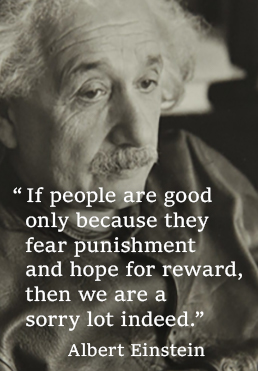
But don’t I find the lack of meaning depressing? (As if avoiding depression would justify my believing something that isn’t there.) No, but it would depress me if it were true that people cannot be moral without believing in some supernatural being. Although 57% of Americans subscribe to this notion, I am not depressed, since I know by counterexample that it simply isn’t so.
Defenders of the faith like to point out that scientists don’t know everything, that scientists disagree with each other, and that scientists change their minds whenever some new bit of evidence destroys the old paradigm. OK, guilty as charged. They also say that whatever scientists claim to know are simply “theories” — i.e., provisional truths, not absolute ones. Faithsayers see this as demonstrating the fragility and unreliability of science, but this is its very strength: scientists make falsifiable statements and challenge others to falsify them, whereas institutions of faith make unfalsifiable statements and often threaten those who do not accept them. You know where I stand.
One thing I do have in common with religious people is that I think the world would be a better place if more people agreed with me. The religious feel the same way.
• • •
So Merry Christmas and Happy Kwanzaa to you all. May you enjoy the holidays as much as I will. If you like, you can return the sentiments on March 20, General Relativity Day. (March 20, 1916, is the day Einstein’s masterwork, “The Foundations of the General Theory of Relativity,” was published in Annalen der Physik.) That is probably the closest thing to Atheist Christmas there is, other than the one we are all about to celebrate.
______________________________________________________________
¹ For my family, this is yesterday’s news — though I was surprised when my wife recently told me that she thought I was agnostic, not atheist. When I showed her the Registered Atheist ID card that the county requires me to carry whenever I am within 1000 feet of a Baptist church, she was convinced.
² I am being sarcastic, of course. But the underlying point is real enough. In a christianpost.com blog titled “Would You Want an Atheist for a Neighbor?”, the writer was not being sarcastic at all when he lamented “the frenetic and uninformed screeds that atheists purchase and read by the truckload.” Yes, all my neighbors are getting tired of seeing the UPS truck roll into my driveway, delivering more of those atheist screeds. I wouldn’t want to be my neighbor either.
³ Actually, aren’t we all born that way?