


I have been attending a workshop on “The Artist as an Entrepreneur.” Its purpose is to help artists become more successful businesspersons, by teaching basics of business plans, marketing, sales, finances and networking. I appear to be the oldest person in the class, and I think I’m being viewed with some suspicion by a few of the others: while I am there to figure out how to turn a hobby into a business, the other artists are trying to make a living at it. There have been a couple of comments to the effect that “retired people” aren’t serious about or dedicated to the cause of art and so should be avoided. In other words, not real artists.
One of the speakers, while discussing markets and product niches, noted the recent death of “Bob Timberlake” and made a disparaging reference to his work: he was popular and successful, but he was not an artist, don’t we agree? In his haste to lay waste, the speaker got his schlock wrong. Bob Timberlake is still with us — it is Thomas Kinkade who is not.
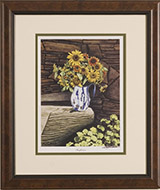
Timberlake
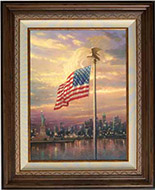
Kinkade
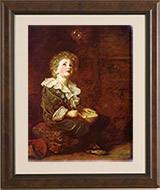
Millais
Is anyone and everyone who calls himself or herself an artist an artist? What standard determines whether a person may be called an artist or whether a work is considered art? This was explored in a 2011 study by Kieran, Meskin and Moore. They asked, “Do works belong to the artistic canon because critics and museum curators have correctly discerned their merits?” Or, do works enter the canon as a result of “cultural exposure over time” with less regard for objective qualities of the work? To find out, the authors compared how viewers reacted to paintings by John Everett Millais (1829-1896) and the aforementioned Thomas Kinkade (1958-2012) after a single exposure and repeat exposures. If quality of a work outweighs exposure to a work in terms of influencing viewer preferences, then one could argue there are in fact objective quality standards for art.
The results: whereas increased exposure to Millais paintings had little effect on how well viewers liked them, “…we found that with bad paintings by Kinkade, exposure decreased, rather than increased, liking [of the work] in relation to our control groups.” I might argue with the authors about having prejudged Kinkade’s work as “bad”, but then again, when people like something less and less the more they see it, that is the kind of art that ends up in a Goodwill store.
At my workshop, I was struck by the number of attendees who shared that making art was integral to advancing their social cause. I began to wonder: if I am to be an artist, do I need not only a product but a cause? Will a cause make my art better? Will it get me through the door and on the wall?
Perhaps the workshop speaker was right and Kinkade was not a real artist. And neither will I be a real artist until the Gatekeepers of Good Artisanship evaluate my worthiness against the standards and decide that I pass. I can’t wait.


I think that, as an artist, there must be some idea behind your work. there as to be some animating idea for the work to come into existence in the first place. I don’t know if “csause ” is the right word but some reason to make the art i find is critical. I have stopped doing any work that does not have meaning for me
Allow me to share my interpretation of the plight of “art” in the last two centuries or so, since I’ve been thinking about this a lot recently. (I’ll preface this by saying that I have zero “training” in art, so if my comments come off as naive or sophomoric, it’s because they are)
Art (in the form of painting on canvas, wood, ceiling, etc) was humanity’s first attempt at photography. During that early period, you were considered a “good” artist if you could correctly approximate the human form in your paintings.
When actual photography was invented, “artists” were forced to adapt, so they said, “Let’s paint ‘impressions’ of things that we see — you know, things that a photo camera can’t produce. Yeah, that’s the ticket.” (in Jon Lovitz’s voice)
When this got boring after 50 years, they said, “Why don’t we paint things that are completely absurd, with random lines, triangles, and circles! The less it looks like the subject we’re painting, the better. So what if it can be reproduced by a 5-year-old?”
After 50 more years, one artist (a marketing genuis, to be sure) had an epiphany: “I’m going hang up a blank canvas, and leave it up to the viewers to decide what the hell I’m trying to say! Furthermore, let’s convince people that it’s cool to search for meaning in meaningless abstractions.”
In short, I think I’m saying that “modern” art is the last gasp of a dying form of expression. This is evidenced by the increasingly-dubious means by which an artist has to “make it” in the world of art. These include:
– increasing dependence on knowing the right people.
– increasingly excellent sales and marketing skills (always a red flag in my opinion).
– increasingly controversial or shocking subject matter as cry for attention (Virgin Mary in elephant dung).
– increasing skills in BS or obfuscating obvious ideas to make them sound profound.
But I digress.
DB, I offer an example to illustrate your point. The following is a promotional blurb for a gig in a local music/theater venue. Let me say beforehand that the performer in question may be good, but this is about public relations, not performance:
“Born into a deep musical tradition, [performer] has been a traveling songbird for most of her years. She approaches music and dance the same way she approaches life: with an irrepressible spirit, a driving rhythm in her step, and a heart the size of the Appalachian Mountains. A compelling singer, songwriter, and instrumentalist and a powerhouse on the dance floor, [performer] can light up a room of any size with the mischievous sparkle in her blue eyes and the tenderness in her songs. She will be welcoming the spring in her beloved hometown with stunning new music and a host of special guests.”
I also was born into a deep musical tradition (my father played piano in a jazz band in the early 30s). I also was a traveling songbird — one night, when we were vacationing in Toronto and heading back to our hotel room after a great dinner, I played “Benny and the Jets” and other rock standards on the piano for a wedding reception spilling out of its conference room. Compelling? I compel you to read the rest of this comment. I also may have a heart the size of the Appalachian Mountains, we will see what my cardiologist says. The one thing I don’t have is blue eyes, but please don’t hold my genes against me.
DB, perhaps the people who spend money on music and art are the same people who are susceptible to generic promotional nothings like the one quoted above.