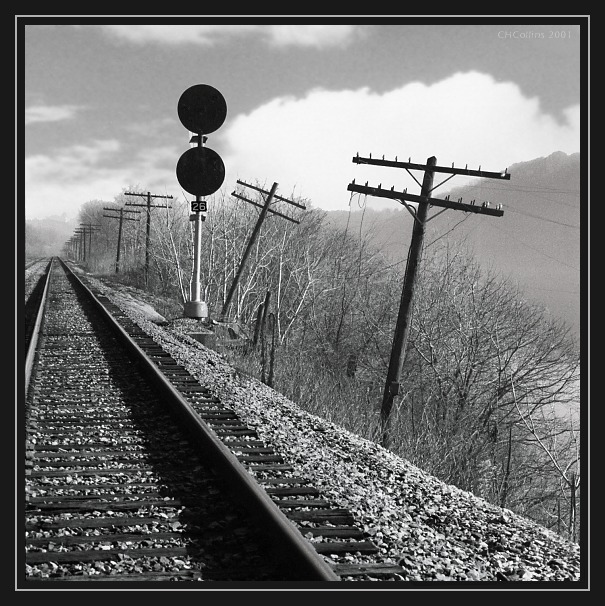
I’m a casual “fine art” photographer. Here “fine art” means that no one else thinks it is art, save for other fine art photographers. (The value I add is the composition. Or so I say.) In any event, the subjects I like to shoot include factories, bridges, buildings, railroads and other totems of urban America. So naturally, I was concerned when my rights as a citizen to take pictures in public places seemed threatened in the wake of 9/11.
When the Patriot Act was passed, there was a lot of talk about new restrictions on what photographers may shoot. But it turns out the Act itself says nothing about photography. What restrictions did arise were based on misinformed, misapplied home-grown justice and the consequent self-censorship by photographers, out of fear of the former. The cop eyeing you suspiciously, as if you were scouting terrorist targets, has a badge and a gun, and you have a camera. You want to keep your camera.
I clearly recall news stories from the 1960s and 70s chiding the U.S.S.R. when it arrested its own people for taking photos near government facilities. “Only in the Soviet Union!” we Americans said, in our usual self-congratulatory manner. Now, them is us.
A recent story on NPR described how police dealt with a city bus passenger who used her cellphone to record them making an arrest:
“One of the officers told me to turn off my phone, because I was recording them. I said no. And then she grabbed me and pulled me off the bus to the cop car, which was behind the bus.”
The police erased the video from Fitchette’s phone. She was handcuffed and spent the next two hours in the back of a squad car before she was released. No charges were filed.
No charges were filed because the “law” in this case was made up on the spot. However, the act of recording was prevented and the larger point was made. We don’t want you to do this, and we can stop you, and so we will.
In the United States, it is legal to take photos of just about anything while standing in a public place, or even in a privately-owned place open to the public, like a shopping mall. Some nations like France and Germany have stricter notions of privacy, but I don’t live in those nations and neither do our police.
What intrigues me about this photo-paranoia is that it is okay to witness but not record. To take this further: I may store a scene in my brain without being questioned, but if I wish to record the same scene more faithfully, using a more reliable and permanent medium than my neurons, it raises suspicions. What kind of distinction is this? Moreover, what are people afraid of?
It was nice when we had Soviet Union totalitarians to kick around. Those were the days.


I’m now locked out of Facebook, having attempted to log in while I was visiting Canada. Yep, that’s right. When I did this, Facebook said, “We do not recognize your computer,” and asked me to type in a scramble-text and enter my birth date. The scramble-text was not a problem. The birth date was. I had used a fake date in my profile (I don’t trust Facebook security, or anything else about Facebook) and naturally I could not remember the date I entered.
So, if you are a Facebook friend visiting my blog, hello to you, but don’t expect to see me on Facebook any time soon. I have inquired but don’t intend to go to great lengths to return.