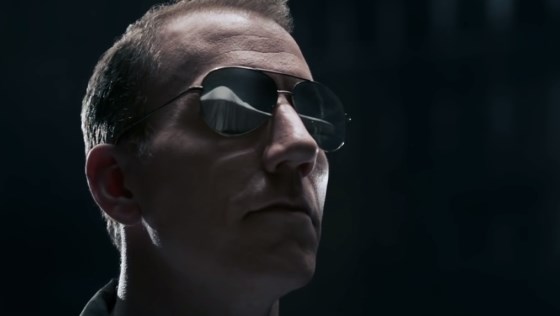
This morning, executives from Lufthansa, parent company of Germanwings, held a press conference to respond to evidence that one of their pilots deliberately crashed Flight 9525 into the French Alps. The press conference was conducted almost entirely in German — a live English translation was provided for television. I watched the event on MSNBC.
I was steamed as I watched and listened to the following exchange between Katy Tur of NBC News and Carsten Spohr, CEO of Lufthansa. (MSNBC posted a clip of it here.)
TUR: Katy Tur, NBC News. Apologies if you’ve already answered this, but are there regulations where a flight attendant has to be in the cockpit if a pilot, uh, has a bathroom break or goes to get a coffee?
SPOHR (giving his first English-language response): Well, there is [sic] regulations in some parts of the world, including the one I assume you are coming from, the U.S., but only a small number of airlines in Europe, as far as I know, no, but [?] airline at all, for sure, none of the big airlines we work with.
TUR: Are you going to do that in the future?
SPOHR: I don’t see any need to change our procedures at this very point, I think it’s this mis [?] single occasion, but as I mentioned before in German, we will get together with the various experts in the Lufthansa group airlines, in the authorities, with our German government, to see if our procedures can be refined. I think we should not now jump into short notice activities, we rather should refrain from that and make analysis first.
TUR: So you are confident in your pilots?
SPOHR: I wish you understood my German because I’ve said twice, and I repeat it in English, without any doubt. My firm confidence in the selection of our pilots, in the training of our pilots, in the qualification of our pilots, in the work of our pilots, has not been touched by this single tragedy.
I have highlighted what I think are Spohr’s off-putting and superior-sounding remarks, for the reader’s benefit. You can watch the clip and decide for yourself.
The clip does not show this, but the question right after Katy Tur’s was from another English-speaking reporter, who asked Herr Firmenboss Spohr to answer in English. Spohr did not pause a second before launching into a German-language response.
We have seen this attitude before. We saw it from NASA after the Challenger shuttle disaster. We saw it from George W. Bush on the deck of the USS Abraham Lincoln and again in the aftermath of Hurricane Katrina. We saw it from BP after the Deepwater Horizon explosion and oil spill. And now from the CEO of Lufthansa.
The proper response in this situation — the one that would help people feel more confident that problems will be addressed — goes without saying. But I’m going to say it anyway, because at least one person, Carsten Spohr, needs to hear it:
We will review all of our relevant procedures, training and equipment. We must learn from every single event and make whatever changes are needed so that this cannot happen a second time. We cannot assume anything. We must all adopt the best practices our industry knows. Our passengers, our crew members and their families expect no less.
In case Herr Firmenboss Spohr still does not understand, I will say it again, in German:
Wir überprüfen alle unsere einschlägigen Verfahren, Ausbildung und Ausrüstung. Wir müssen von jedem einzelnen Falle zu lernen und was Änderungen erforderlich sind, so dass dies nicht ein zweites Mal passieren. Wir können nichts übernehmen. Wir alle müssen uns verabschieden die besten Praktiken der Branche kennt. Unsere Passagiere, die Crew-Mitglieder und ihre Familien erwarten nicht weniger.
I am fortunate that I do not have to fly on Lufthansa while Herr Spohr is in charge. Arrogant attitudes like his are a far greater threat to airline safety than troubled pilots.


Many human afflictions have plain names and fancy names. For instance, swelling is the plain name and edema is the fancy name. Itching is the plain name and pruritus is the fancy name. Greed is the plain name and unenlightened self-interest is the fancy name. Bedwetting is the plain name and… well, I should stop there.
The philosophy of enlightened self-interest maintains that “persons who act to further the interests of others … ultimately serve their own self-interest.” The unenlightened version goes something like this: “Persons who fail to further their own interests ultimately lose out to those who do.” Friends, welcome to our unenlightened world.
A classic example of unenlightened self-interest is found in the alcoholic beverage laws of the various states. I was recently (and not for the first time) reminded of these laws when I went to purchase a bottle of wine at my local supermarket, along with other items for a dinner my wife was preparing for an ailing neighbor. It was a Sunday morning, 11:48 am. In North Carolina, you cannot buy wine or beer on Sunday until noon, so I had to kill time in the store before I could check out and go home.
What was the point? What moral or legal principle did I respect by waiting ten minutes to buy a bottle of wine? None that I see, and I think most people would agree, this is absurd. That being the case, why do such logic-defying laws remain on the books? Look no further than unenlightened self-interest.
The table below shows where various alcoholic beverages may be sold, for the three states I have lived in over the past sixty-odd years. Each has its own odd restrictions:
Liquor Stores
Taverns
Wine Stores
Taverns
Of these, Pennsylvania has the most restrictive rules on alcohol sales, New York the least. It must be because Pennsylvania drinkers are the most wanton and depraved, compared to those in neighboring states. There can be no doubt that thirsty Pennsylvania drinkers, if they were to be provided more convenient ways to buy the beer, wine and spirits of their choice, would pour out onto their potholed streets in a Walking Dead-style rampage, lurching from one establishment to the next and drinking the state dry, one case at a time. No choice, then, but for the state government to step in and protect Pennsylvanians from themselves. Drunken sots, the lot of them.¹
It might seem that New Yorkers (who drink 2.17 gallons of ethanol per person per year) and North Carolinians (2.05 gallons) are not all that more sober than Pennsylvanians (2.26 gallons) and therefore warrant similar restrictions on alcohol sales. But that would involve logic — and we can’t have any of that running loose, not when money is involved.
The perverse world of alcohol regulation was brought to the forefront just last week when the Pennsylvania Liquor Control Board decided to relax its rules on beer sales. Previously, a distributor (think drive-thru beverage depot) could only sell beer by the case, but thanks to the PLCB’s highly controversial decision, it may now sell 12-packs and 18-packs as well.
Pennsylvania’s thousand-plus beer distributors are happy enough. The Malt Beverage Distributors Association of Pennsylvania (MBDAPA), the lobbyist for distributors, is crowing about its accomplishments on its website:
Note the words: secured, opposition, stopped, ensured, defeated. These are words that describe the successful defending of one’s turf. Such words were not chosen casually. They tell a victory story as thrilling and inspiring as that of the Alamo — where thousands of non-specialty retailers were prevented from selling beer from its adobe-lined aisles.
Distributors may be happy, but tavern owners are not. The President of the Pennsylvania Licensed Beverage & Tavern Association — the tavern lobby — does not have much to tout but still sees this as a good time to pass around the tip jar:
As President of this hard-working association, I am asking for your help with our political action committee (PAC) fund. Even if you are not a member of the Association, you can still help us to protect YOUR BUSINESS by contributing to this fund so that we can help our friends in the State Legislature. These friends are the men and women on Capitol Hill that stand up for your rights and refuse to cast votes that will hurt you, they introduce bills that will help you grow your business, and they refuse to bow down to demands that take away from the value of your license.
If there were a Guild of United Lubricated Pennsylvanians (GULP), it might well ask: “What about us? How are we drinkers best served by monopolistic practices and political protections?” But not to worry, there is no such guild. Those voices can cry in their beer.
This is the plain reality in Pennsylvania, New York, North Carolina and all the other states of this union. The reason change is so hard, on both national and state levels, is because every law and regulation is ultimately about crowning financial winners and losers, and no one will abide being on the losing side.
It would take an article ten times this length to list and describe all the vested interests involved in the sale of alcholic beverages. That each state has its own peculiar stance on alcohol sales is plainly a legacy effect, preserving interests that prevailed in 1933 when Prohibition was repealed² and baked in by decades of dollar flows since. The only logic behind our present-day restrictions comes straight from the Bible: “Whoever has will be given more; whoever does not have, even what they have will be taken from them.”³
The politics of today — Bernie Sanders and Elizabeth Warren notwithstanding — is not about dispensing justice but directing cash flows. Corporations and unions have their spokespersons, lobbyists and dollars, but citizens have… their ever-diminishing right to vote for the big-money advocate of their choice, after consulting their unenlightened self-interest and whatever passes these days for a conscience.
So here’s to us. Drink up.
_____________
(1) I hope my old friends from Pennsylvania are reading this — if they can keep their eyes focused.
(2) North Carolina never did ratify the repeal of federal Prohibition. North Carolina ended statewide Prohibition in 1935 but allowed its counties to continue the practice. Graham County, on the Tennessee border, remains dry.
(3) Mark 4:25. See, I can quote the Bible and not melt into a puddle of vodka.